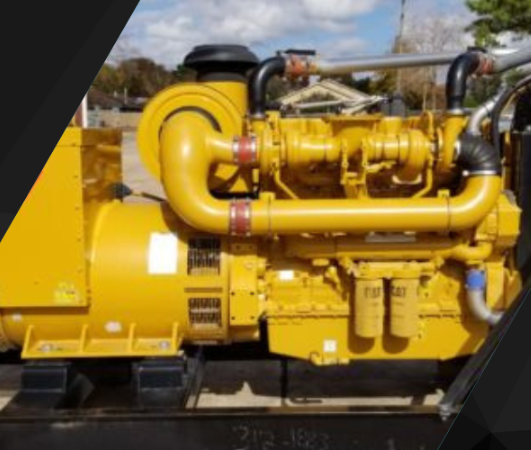
There are many variations of passages of Lorem Ipsum available, but the majority have suffered alteration in some form, by injected humour, or randomised words which don\'t look even slightly believable. If you are going to use a passage of Lorem Ipsum, you need to be sure there isn\'t anything embarrassing hidden in the middle of text. All the Lorem Ipsum generators on the Internet tend to repeat predefined chunks as necessary, making this the first true generator on the Internet. It uses a dictionary of over 200 Latin words, combined with a handful of model sentence structures, to generate Lorem Ipsum which looks reasonable. The generated Lorem Ipsum is therefore always free from repetition, injected humour, or non-characteristic words etc.
Step 1: Calculate the required Active Power (in Watt)
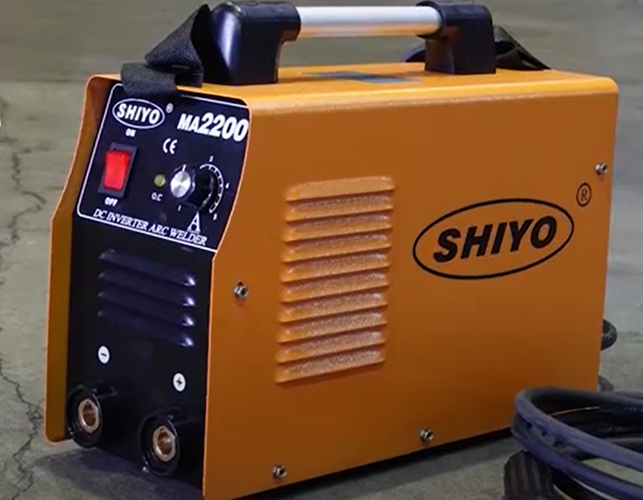
First, we need to determine the total electrical power consumed by this welding machine. Taking the reading of welding machine’s output voltage and current, we can determine the total required power by using Watt’s Law.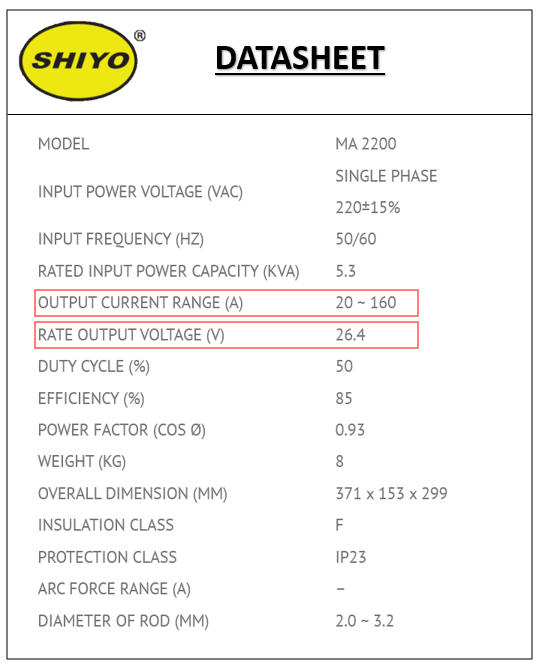
From the datasheet, the rated output voltage is 26.4 volts, and the maximum output current is 160 Amperes.
Based on Watt's Law for single phase,
Power = voltage x current (P = V x I).
Therefore,
Power = 26.4 Volts x 160 Amperes
Power= 4.224 kW.
Step 2: Convert KW to kVA.
A generator is normally measured by apparent power kVA. However, the earlier obtained value was in active power, kW. Thus, we need to convert the active power to apparent power by dividing the active power with 0.8 based on power factor ratio rules.
Power factor rules refer to
Active power / Apparent power = 0.8
International standards state that generators’ power factor was fixed at 0.8.
Therefore, the apparent power is
Apparent power = Active power / 0.8
Apparent power = 4.224 kW/0.8
Apparent power= 5.28 kVA.
Step 3: Safety Margin for Generator
We need to identify whether the generator will be our primary power source or just a standby. A standby generator should not be operated at maximum capacity for more than 30 minutes.
For this case study, the welding machine will need to continuously draw power from the generator; thus, it is considered our primary power source.
Since the generator was considered main power supply, we need to have a reserve of 30% safety margin as a rule of thumb in sizing the generator.
Therefore, the apparent power of 5.28 kVA needs to be multiplied by 1.3 as a safety margin.
This concludes that the minimum required generator size is
5.28 kVA x 1.3 = 6.9 kVA.
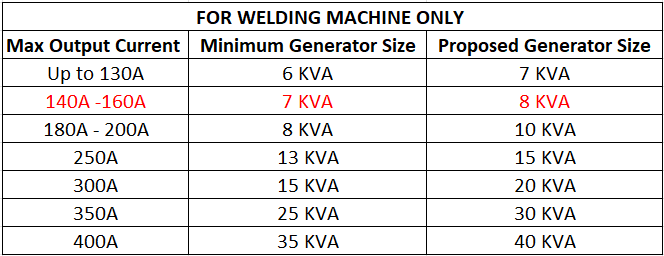
From the calculation, it is concluded that we need a minimum of 7 kVA or recommended 8KVA for a welding machine with a maximum current level of up to 160VA.
The following table puts together the minimum and recommended generator sizes required for a welding machine for your quick reference.